Wholesale Art Supplies: A Complete Guide for Importers & Distributors
- Share
- publisher
- H&B Art Team
- Issue Time
- Aug 27,2026
Summary
A complete wholesale art supplies guide for importers and distributors: category landscape, factory qualification, EN71/ASTM compliance, MOQ & pricing logic, Incoterms, assortment architecture, and 7 classic importing mistakes to avoid.
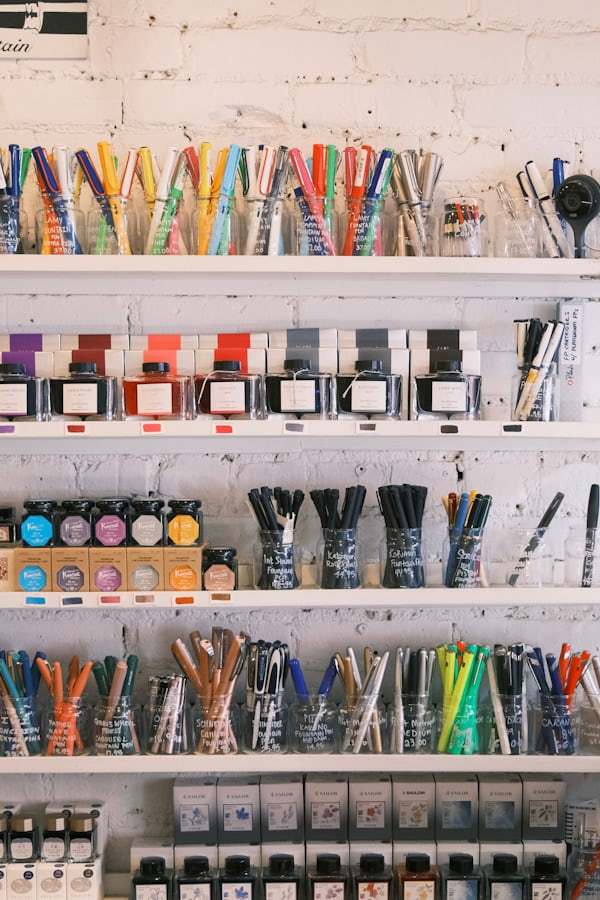
Wholesale Art Supplies: A Complete Guide for Importers & Distributors
Art supplies remain one of the most resilient categories in cross-border trade. Unlike fast-moving consumer goods tied to a single season, art materials enjoy steady, year-round demand from schools, stationery chains, craft retailers, online marketplaces and professional artists. This guide walks importers and distributors through the complete sourcing journey — product landscape, factory qualification, compliance, pricing, logistics and assortment strategy — based on what H&B Art has learned supplying art materials to buyers in more than 60 countries since 2010.
Why Art Supplies Are a Strong Import Category
Several structural forces keep demand for art supplies stable and growing:
- Education budgets: art programs are a required part of national curricula in most markets, so school tenders for colored pencils, watercolors and sketch kits renew every year regardless of the retail cycle.
- The adult hobby boom: adult coloring, journaling and DIY crafting have expanded the buyer base far beyond children — a demographic that buys premium sets at higher price points.
- E-commerce velocity: marketplace sellers need fresh SKUs and giftable bundles, which keeps wholesale demand for fast-moving art sets strong.
- Global manufacturing concentration: China produces the large majority of the world's colored pencils, markers, watercolors and brushes. That concentration makes direct factory sourcing both necessary and advantageous for serious importers.
What this means for you: art supplies are a category where a well-planned first container can establish a repeatable product line for years — provided you source from a factory that can deliver consistent quality at scale.
Step 1 — Map the Product Landscape Before You Buy
Importers who try to "buy everything" on the first order usually end up with a scattered assortment and weak negotiating power. The smart approach is to understand the category structure and pick your entry points:
| Category | Typical Entry SKU | Demand Drivers | Margin Profile |
|---|---|---|---|
| Colored Pencils | 12-72 color sets | Schools, hobbyists, gift retail | Steady, high volume |
| Watercolor Sets | 12-56 color pans | Students, art classes, adults | Good; premium tiers exist |
| Markers & Fineliners | 24-100 color dual-tip | Kids, illustration, journaling | High velocity on marketplaces |
| Sketch & Drawing Kits | 33-228 piece sets | Beginners, back-to-school, gifts | Excellent AOV bundling |
| Oil Pastels | 12-48 color | Children's art, schools | Good, low complexity |
| Paint Brushes | Assorted sets | All user segments | Consumable, repeat purchases |
Recommendation: start with 2-3 adjacent categories you understand, master their quality benchmarks, then expand. Adjacent categories share packaging suppliers, freight patterns and retail buyers — which compounds your sourcing efficiency.
Step 2 — Qualify the Factory Before You Negotiate
Price is the last thing you should discuss with a new supplier. The first conversation should be about capability. A reliable art supplies manufacturer can answer these questions with documentation, not just promises:
- Factory type: Are they a real manufacturer with in-house production lines, or a trading company? Ask for a video tour of the pencil/marker production floor and check for their own equipment.
- Certifications: EN71-3 (EU toy safety), ASTM D-4236 (US art material labeling), CE, REACH and BSCI (social audit) are the core documents importers should request. Verify expiry dates and issuing bodies.
- In-house QC: Do they run breakage, color-consistency and toxicity tests in-house? Ask how many QC checkpoints exist between raw material and finished carton.
- R&D depth: Can they develop custom colors, packaging and formulations for your private label? A factory without R&D is a dead end for branded importers.
- Capacity & lead time: What is monthly output per product line? What is current lead time for a 1x40HQ order? Capacity constraints at peak season (July-September) are the #1 cause of missed back-to-school deliveries.
- Reference clients: Ask for export records or existing brand partnerships. A factory serving established brands is usually willing to share non-confidential references.
H&B practice: we welcome factory video tours, provide full certification documentation packs, and publish honest capacity data — because qualified importers come back, and repeat business is our growth engine.
Step 3 — Compliance & Certification Essentials (Get This Wrong and You Pay Twice)
Non-compliance is the most expensive mistake in art supply importing. A shipment held at customs costs you freight, demurrage, storage and lost shelf time. Build compliance into the sourcing process from day one:
- EN71-3: limits heavy metals (lead, cadmium, arsenic, etc.) in toy and children's art materials. Mandatory for EU-market children's products and widely accepted as a global baseline.
- ASTM D-4236: requires hazard labeling for art materials sold in the US. Look for the "AP" (Approved Product) seal, which means the product passed toxicological review.
- CE marking: required for products sold in the EEA where applicable directives apply; your supplier should provide the technical file on request.
- REACH: EU regulation on chemicals; SVHC declarations are increasingly requested by EU distributors.
- California Prop 65: relevant if you distribute into the US state of California — check labeling obligations with your compliance advisor.
Practical tip: ask the factory for test reports per production batch, not just one certificate. Batch-level reports prove the factory's QC system actually runs. H&B provides batch test documentation for EN71-3 and ASTM D-4236 on all certified lines.
Step 4 — MOQ, Pricing & Lead Time: The Real Numbers
Understanding how factories price is the fastest way to negotiate better. Here is the structure behind most art supply quotations:
| Order Size | Typical Pricing Logic | What It Unlocks |
|---|---|---|
| 300-500 sets | Base FOB price, standard packaging | Entry point for private label and testing |
| 1,000 sets | 8-15% discount off base | Custom packaging, color matching |
| 5,000+ sets | Volume pricing + priority capacity | Exclusive designs, dedicated production slots |
Lead time expectations (from confirmed order):
- Standard stock-item orders: 15-25 days
- Private label with custom packaging: 30-45 days (packaging design approval is the longest step — freeze artwork early)
- Fully custom formulations or new molds: 60-90 days
Incoterms cheat sheet: FOB gives you control over freight; CIF hands shipping to the supplier but typically adds 3-5% to the price; DDP shifts all logistics risk to the factory but is usually only worth it for large, experienced importers. Most first-time importers choose FOB + their own freight forwarder for full control.
H&B note: our MOQ starts at 300 sets for private label, and we give transparent price-break tables so buyers can plan inventory against volume discounts instead of discovering them after the order.
Step 5 — Build a Product Mix That Sells (Not Just One That Ships)
Distributors who treat a container as "a lot of products" miss the real game: assortment architecture. Winning importers design their mix with three roles:
Traffic SKUs
Price-competitive entry sets (e.g., 24-color pencils) that win listings and drive search traffic. Thin margin, high velocity — their job is attention.
Margin SKUs
Mid-tier sets (48-72 colors, better packaging, giftable) where you can earn 40-60% margin. These carry the P&L.
Hero / Gift SKUs
Large kits (100-228 pieces, premium boxes, bundled accessories) positioned for gifting seasons. Lower volume, highest absolute profit per unit.
Rule of thumb: roughly 60% of SKUs should be steady sellers, 30% new or seasonal experiments, 10% premium statements. Review the mix every quarter against sell-through data and retire losers fast.
Step 6 — Avoid These 7 Classic Importing Mistakes
- Buying on price alone: the cheapest quote usually means thinner pencil cores, weaker pigments or lower packaging quality — problems that surface as returns and bad reviews, which cost far more than the saved 5%.
- Ignoring color consistency: ask for color-matching samples against your Pantone references before production. Color drift between batches is the #1 quality complaint in art supplies.
- Under-specifying packaging: fragile tin boxes and weak corner protection cause transit damage. Define carton strength, inner trays and moisture protection in the contract.
- Skipping pre-shipment inspection: a third-party or factory-hosted inspection before loading protects you from off-spec goods. Do not waive it for your first order.
- Forgetting seasonality: back-to-school ordering happens May-July for October delivery. If you order in September, you have missed the season. Plan 4-5 months ahead.
- Not freezing artwork early: every packaging revision adds days to lead time. Approve artwork in one round with clear, complete specs.
- Treating certificates as one-time paperwork: regulations change and certificates expire. Re-request current documentation annually.
Step 7 — Turn One Order into a Lasting Supply Line
The best importers treat their factory as a strategic partner, not a vendor. What that looks like in practice:
- Share your sell-through data: factories that see your sales trends can pre-position raw materials and shorten your next lead time.
- Commit to rolling forecasts: a 12-month rolling forecast lets the factory reserve capacity and often unlocks better pricing than one-off negotiation.
- Standardize where possible: reusing packaging structures and color formulas across seasons reduces your cost and your risk.
- Negotiate service, not just price: sample speed, QC reporting and problem resolution matter more to your P&L than a 2% price cut.
From H&B's experience: our longest distributor relationships began with a single 500-set test order and grew into multi-container annual programs. Small first orders are not just acceptable — they are how smart factories prove themselves.
Related Products from H&B Art
Explore wholesale best-sellers that importers and distributors typically open their first order with:
Start Sourcing with a Factory That Ships What It Promises
H&B Art is a certified art supplies manufacturer (EN71-3, ASTM D-4236, CE, REACH, BSCI) with in-house production of colored pencils, watercolor sets, markers, sketch kits, oil pastels and brushes. Private label MOQ from 300 sets, samples shipped within 7 days, transparent FOB price-break tables, and export support to 60+ countries. Send us your target retail price and target market — our export team will recommend the right specs and margins.