The Complete Guide to Acrylic Paint Markers: Types, Uses & How to Choose the Best
- Share
- Issue Time
- Aug 6,2026
Summary
Everything you need to know about acrylic paint markers — types, ink formulas, tips, surfaces, and selection criteria for artists, retailers, and OEM brands.
Why Acrylic Paint Markers Have Become a Global Best-Seller
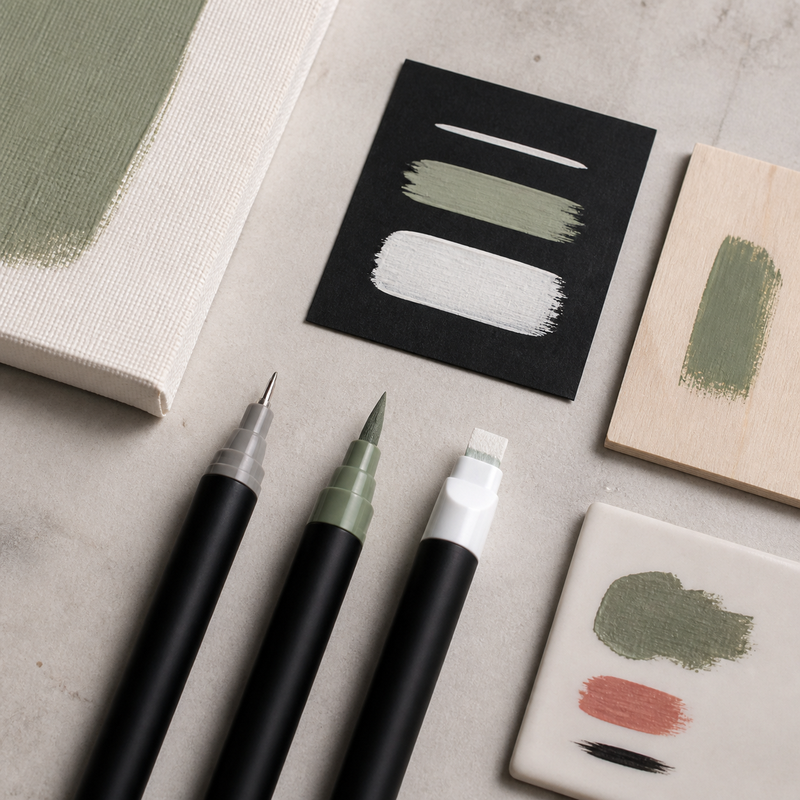
Between 2023 and 2026, acrylic paint markers grew from a niche craft product into one of the fastest-expanding categories in the global art supply market, with year-over-year sales growth of 40-80% reported across major e-commerce platforms. The reasons are clear: acrylic markers combine the precision of a pen with the permanence and opacity of acrylic paint, work on nearly any surface, require zero setup or cleanup, and deliver instant professional-looking results. For retailers, this category offers higher margins than traditional markers; for artists, it opens creative possibilities that brushes and tubes cannot match; and for OEM brands, it represents one of the most accessible entry points into the art supply market.
What Are Acrylic Paint Markers? The Core Technology
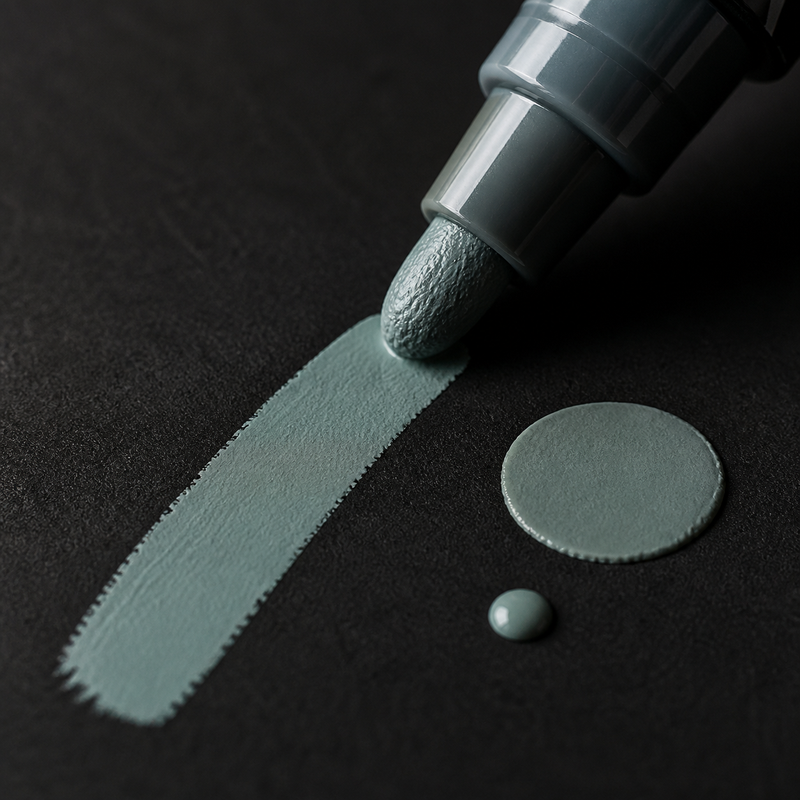
An acrylic paint marker is a pen-style applicator filled with acrylic polymer paint — pigment suspended in an acrylic resin emulsion. The acrylic binder serves two critical functions: it creates a durable, water-resistant film once dry, and it enables excellent adhesion to a wide range of surfaces. Unlike water-based markers or alcohol markers, acrylic markers leave an opaque, permanent, layering paint finish that does not bleed through paper or dissolve when overcoated. The ink dries to a matte or satin finish that can be topcoated with varnish for gloss or UV protection. The key technical differentiators among acrylic markers are: pigment concentration (determines opacity), acrylic binder quality (determines durability and flexibility), tip construction (determines line control), and ink flow control system (determines consistency and dry-out resistance).
The Three Main Acrylic Marker Types: Water-Based, Paint-Based, and Gel
Understanding the three primary acrylic marker categories is essential for both artists and buyers. Water-based acrylic markers use a water-diluted acrylic emulsion, offering good coverage with lower cost and easy cleanup. They are the most common type in student and hobby sets, ideal for paper, cardstock, and light craft projects. Paint-based acrylic markers contain high-solids acrylic paint with premium pigment concentration, delivering maximum opacity even on dark surfaces, excellent layering capability, and the closest match to traditional tube acrylic paint in marker form. These are the professional standard used by graffiti artists, sneaker customizers, and fine artists. Acrylic gel markers are a hybrid formulation with a thicker, gel-like viscosity that sits on the surface rather than absorbing, producing the most vivid colors on black and dark papers. Each type serves a distinct market segment — and OEM brands often launch all three formulations under a single product line to capture the full market.
Choosing the Right Tip: Fine, Brush, and Broad
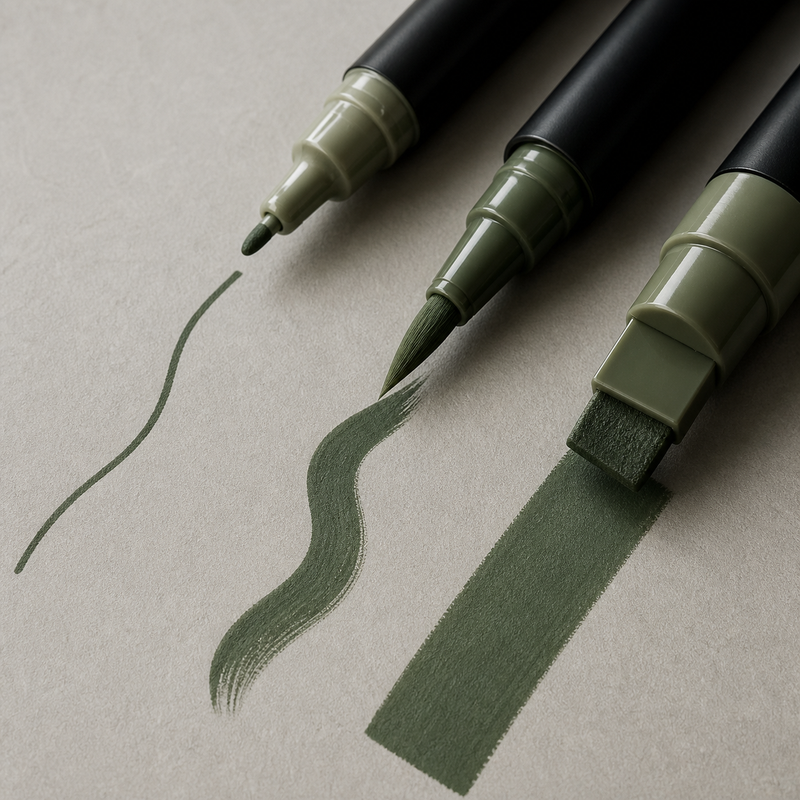
Tip selection determines the artistic range of a marker. Fine tips (1-3mm) — typically bullet or needle-point — deliver precise outlines, lettering, and fine detail work; they are essential for drawing, calligraphy, and intricate line art. Brush tips (3-6mm) provide variable line width through pressure control, enabling flowing strokes, calligraphic effects, and soft gradient fills; they are the preferred choice for illustration and mixed-media work. Broad/chisel tips (6-15mm) cover large areas quickly, ideal for graffiti lettering, murals, and background fills. Dual-tip markers combine two tip types in a single body — most commonly fine + brush — offering the versatility of two tools in one package. When sourcing markers for your brand, dual-tip configurations consistently outperform single-tip sets in consumer preference surveys and retail sell-through rates.
Multi-Surface Mastery: What Acrylic Markers Can (and Can't) Do
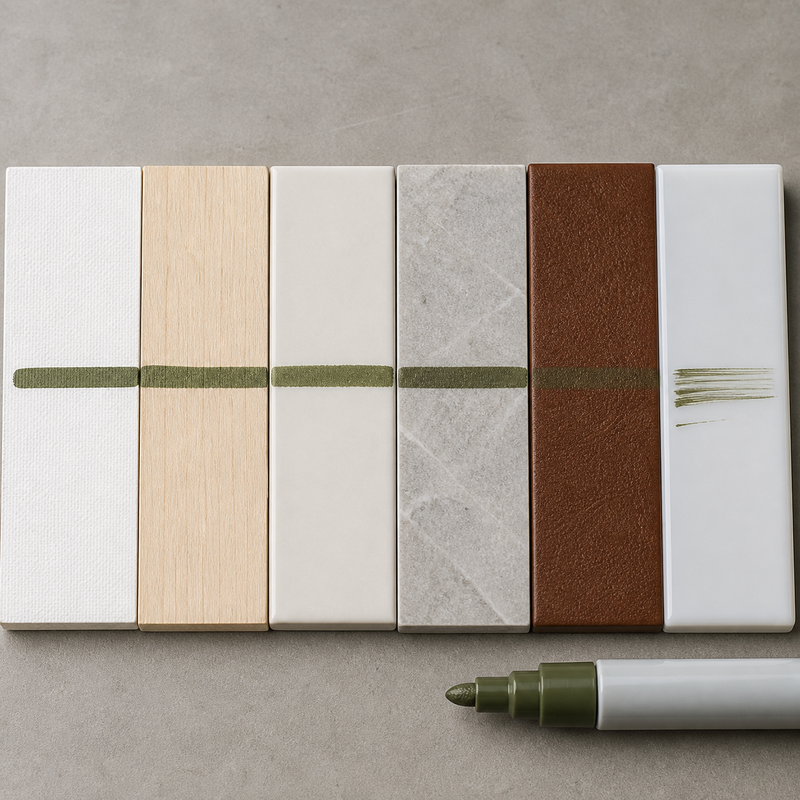
The defining advantage of acrylic markers is surface versatility. They adhere permanently to: canvas and stretched canvas panels; wood (raw, sanded, or primed); ceramics and pottery (mugs, tiles, planters); glass and mirrors (with heat-setting for dishwasher resistance); metal (primed or lightly sanded); stone and rock (the booming rock-painting hobby); fabric (set with heat/ironing); plastic and resin (with surface preparation); leather; and paper of all types. The only significant limitation: untreated non-porous plastics and Teflon-type surfaces may require primer for permanent adhesion. This multi-surface capability makes acrylic markers a single-SKU solution that serves crafters, artists, and DIYers alike — a key selling point for both retail packaging and B2B catalogs.
How to Test Marker Quality: The Buyer's Checklist
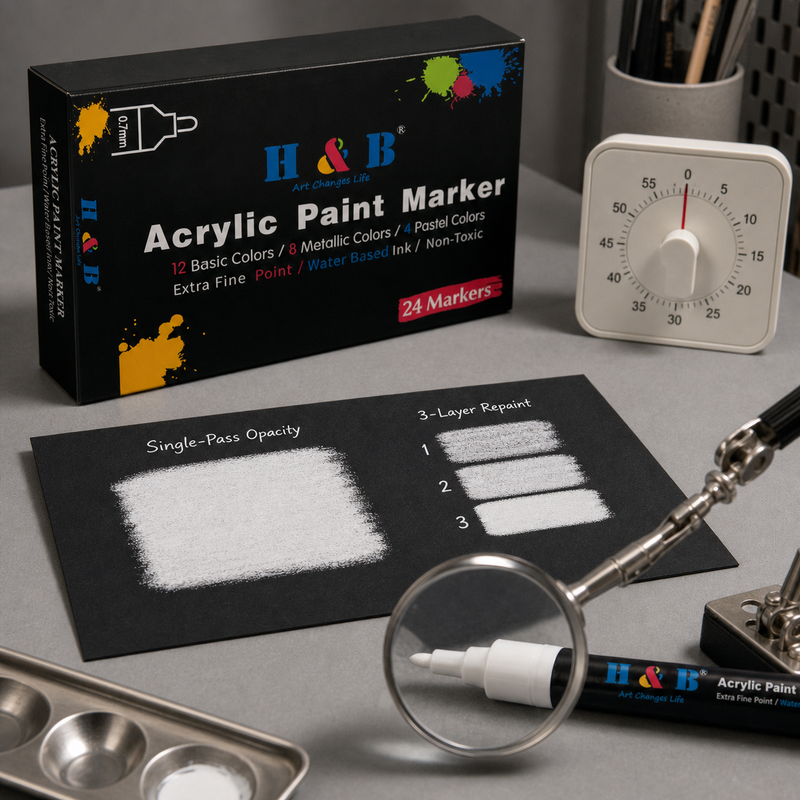
When evaluating acrylic markers for your brand, use this professional checklist: Opacity — draw on black paper; a quality marker covers with a single pass, leaving no visible underlayer; Drying time — professional markers dry to the touch in 2-5 minutes (touch-dry) and fully cure in 24 hours; Layerability — apply 3-4 layers; premium paint-based markers accept re-coating without smearing; Tip durability — quality nylon tips retain shape after 500+ uses; Color accuracy — check consistency across the set and between production batches; Dry-out resistance — markers should remain usable after 3-6 months with caps sealed; Odor and safety — certified non-toxic formulas (ASTM D-4236) should have minimal odor; and Shake-to-activate consistency — premium markers require 15-30 seconds of shaking to activate fresh ink, not prolonged vigorous shaking that indicates formulation issues.
Top 10 Creative Applications Driving Market Demand
Market demand for acrylic markers is driven by ten dominant application segments: 1. Rock painting — the garden and motivational rock movement that generated billions of views on social platforms; 2. Sneaker and apparel customization — permanent paint markers are the go-to tool for one-of-one footwear design; 3. Canvas and panel art — mixed-media pieces combining marker line work with traditional acrylic washes; 4. Ceramic and glassware personalization — custom mugs, plates, and jars as gifts or retail products; 5. Graffiti and street art — markers for tags, outlines, and sketch work; 6. Scrapbooking and journaling — metallic and pastel shades for decorative accents; 7. Woodworking and furniture upcycling — refinishing and personalizing wooden furniture; 8. Toy and prop customization — model painting and prop detailing; 9. Classroom and educational projects — mess-free paint application for children; and 10. Professional illustration — concept sketches, comic art, and graphic design work where permanence matters.
Metallic, Neon, and Specialty Inks: Expanding Your Color Range
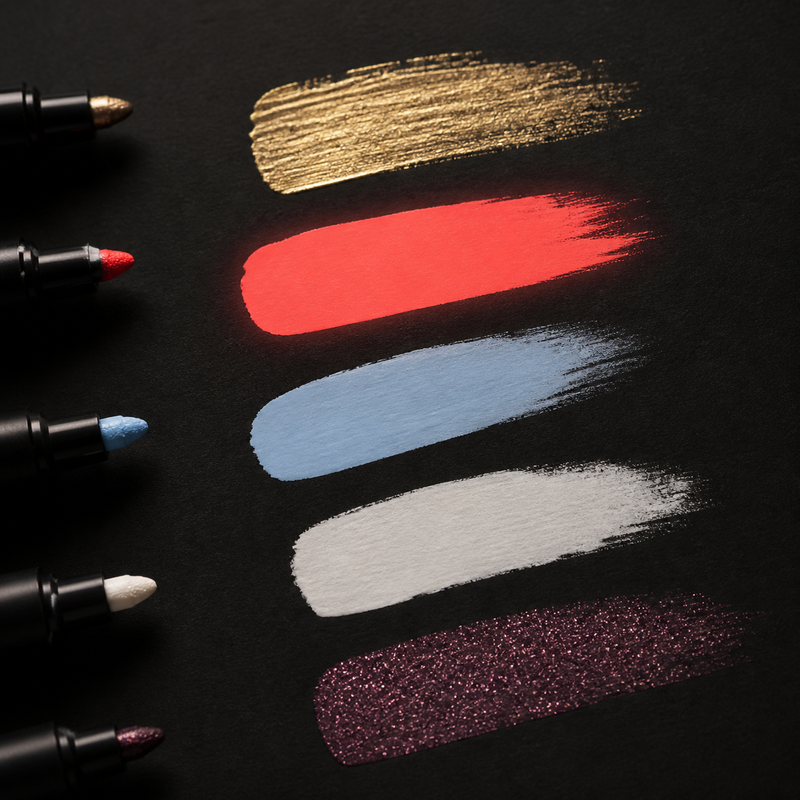
Beyond standard colors, specialty ink formulations differentiate premium marker lines and command higher price points. Metallic inks contain mica or metallic powders that produce a shimmering, reflective finish — extremely popular for crafts, journaling, and decorative applications. Neon/fluorescent inks use high-visibility pigments that glow under UV light, a favorite for graffiti and party décor. Pastel/light-tone inks extend the palette for illustration and fine art. Chalk-finish inks dry to a matte, chalkboard-like texture useful for signage and décor. Glitter inks suspend fine glitter particles in the paint film. For OEM brands, offering 48-120 color sets that include 8-12 specialty colors (metallic, neon, pastel) significantly increases perceived value and average order value without proportionally increasing manufacturing cost.
Care, Storage, and Maintenance Best Practices
To maximize marker lifespan: store markers horizontally or tip-down (never tip-up for extended periods), always recap immediately after use, shake 15-30 seconds before each session until you hear the mixing ball rattle, clean tip tips periodically with isopropyl alcohol if clogged, and avoid storing in direct sunlight or extreme heat which accelerates ink drying. When shipping markers in bulk: use airtight packaging with desiccant packs for humid climates, temperature-stable storage below 35°C, and orientation-neutral shipping containers. For retailers, shelf-life considerations matter — premium markers with sealed valve systems retain usability for 3-5 years from manufacture, while budget markers with simple felt-tip systems may dry out within 18 months. These care instructions should appear on packaging inserts and product pages, reducing return rates and negative reviews.
Safety, Compliance, and Certification Essentials
Acrylic markers sold in regulated markets must meet the same safety standards as other art materials. For the United States: ASTM D-4236 toxicological evaluation (federal requirement under LHAMA). For the European Union: EN71-3 heavy metals migration testing and CE marking. Additional certifications that strengthen market positioning: AP (Approved Product) Non-Toxic Seal from ACMI, CPSIA compliance for products marketed to children under 12, and Proposition 65 compliance for California sales. When sourcing from manufacturers, always request current third-party test reports from ISO 17025-accredited laboratories (SGS, TÜV, Intertek), verify the reports cover your specific SKU and color range, and confirm the certification language can be displayed on your packaging and Amazon listings. A manufacturer that cannot provide complete, current compliance documentation is a sourcing risk regardless of product quality.
OEM and Private Label Opportunities in Acrylic Markers
The acrylic marker category offers one of the most accessible OEM entry points in art supplies, with MOQs typically starting at 500 units for standard configurations. Customization options include: private label branding (logo printing on barrels), custom color set composition (curating your own 24/48/72-color palettes), custom packaging (canvas cases, tin boxes, cardboard display boxes, blister cards), dual-tip configuration selection, and specialty ink additions (metallic, neon, glitter). At H&B Art, we manufacture water-based, paint-based, and gel acrylic markers across 24-120 color configurations, with 16 years of OEM experience supporting brands on Amazon, Etsy, Shopify, and retail shelves worldwide. Our dual-tip markers combine fine and brush tips with premium pigment formulations, and our complete compliance package — ASTM D-4236, EN71-3, CE documentation — is ready for your Amazon listing and customs clearance.
Conclusion: Building Your Acrylic Marker Strategy
Acrylic paint markers are not a passing trend — they are a permanent expansion of the art supply category with sustained 30-50% annual growth projected through 2030. For artists, mastering marker selection — tip type, ink formulation, and surface preparation — unlocks a new creative dimension. For retailers and distributors, the category delivers high margins, strong repeat purchases, and natural gifting appeal. For OEM brands, acrylic markers offer a low-barrier entry point into the art supply market with extensive customization potential. Whether you are selecting your first set or building a private label line, the fundamentals covered in this guide — technology, types, tips, surfaces, quality testing, and compliance — will keep you ahead of the competition.