Inside the Art Supplies Manufacturing Process: From Pigment to Product | H&B Art
- Share
- publisher
- H&B Art Team
- Issue Time
- Aug 24,2026
Summary
A factory-floor guide to how art supplies are actually made: pigment selection, core extrusion, paint dispersion, assembly, QC and compliance. What importers and private label brands must check at every stage.
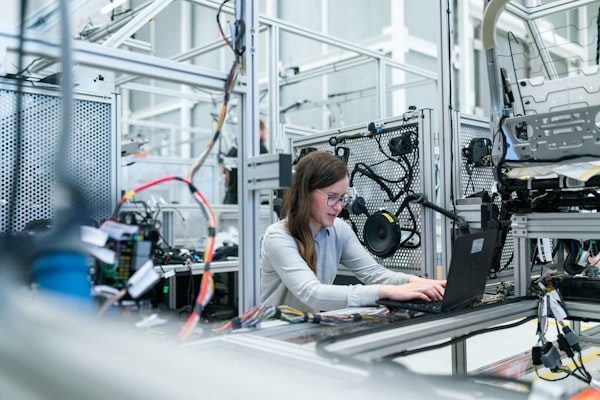
From Pigment to Product: What Actually Happens Inside an Art Supplies Factory
When a buyer places an OEM order for colored pencils, acrylic paint or brushes, the product they receive is the end of a process that begins weeks earlier with raw pigments, binders and wood. Understanding that process is not just interesting — it is a procurement advantage. It tells you where quality is really created, where defects hide, and which questions to ask a factory before you commit to a container order. This guide walks through the real manufacturing journey at H&B Art's Shanghai facility, from pigment selection to final packaging, with the process checkpoints that matter to importers and private label brands.
Step 1 — Raw Materials: Where Quality Is Actually Decided
Every art product begins with material selection, and this is the stage where cost and quality diverge most sharply. In colored pencils, the three dominant material blocks are the pigment, the binder and the wood casing:
- Pigments — organic and inorganic pigments (iron oxides, titanium dioxide, carbon black, phthalocyanines) determine color strength and lightfastness. Artist-grade pigments cost several times more per kilogram than student-grade alternatives, and the difference is visible in fade resistance after a year on a retail shelf.
- Binder systems — wax (paraffin, microcrystalline) for traditional colored pencils, oil for oil-based cores, and gum arabic for watercolor pans. Binder quality controls laydown, blending and breakage resistance.
- Wood casing — cedar remains the premium choice because it sharpens cleanly and resists splitting; poplar is the budget standard. Some factories source FSC-certified wood, which matters increasingly for EU retail listings.
At H&B, incoming materials are tested against a documented spec sheet before any batch starts — pigment suppliers are re-certified annually, and every pigment lot is checked for color strength and heavy-metal content against ASTM D-4236 and EN71-3 limits.
Step 2 — Mixing and Grinding: Turning Powder into a Uniform Core
For pencil cores, pigment and binder are mixed into a dough-like mass, then passed through a grinding mill to achieve uniform particle dispersion. Particle size matters: uneven grinding produces scratchy laydown and inconsistent color. The mixed mass is then extruded into thin core rods under controlled temperature and pressure, dried, and cut to length.
For liquid media like acrylic and watercolor, the equivalent step is dispersion — pigment is milled into the binder until the paint reaches the target tinting strength and viscosity. Factories control this with a fineness gauge (typically 5–15 microns for premium lines) and batch-to-batch color matching against a master standard. This is why two batches from a disciplined factory look identical on the shelf, while undisciplined production drifts.
Core Extrusion (Pencils)
Mixed pigment-binder dough is extruded into rods, dried to a precise moisture level, and quality-sampled for hardness and breakage before reaching the wood assembly line.
Dispersion (Paint & Watercolor)
Pigment is milled into binder to target particle fineness and tinting strength, then batch-matched against the master color standard before filling.
Step 3 — Assembly and Shaping: Where Precision Shows
For pencils, wood slats are grooved, the core is laid in, a second slat is glued on top, and the sandwich is cut into individual pencils — a "slat-groove" process that produces pencils at high speed. What separates good factories is tolerance control: the core must sit centered so sharpening does not break it, and the glue line must be invisible. H&B runs in-line checks at this stage, removing off-center cores before they reach painting.
For brushes, the process is assembly of the ferrule (the metal collar) around a shaped brush head, followed by crimping, gluing and shaping. Brush quality depends on hair selection, bundle density and the crimping pressure — too loose and hairs shed, too tight and the brush loses spring. These are the details a buyer cannot see in a catalog but will feel in the first stroke.
The Eight-Stage Pencil Line, Step by Step
To make the process concrete, here is the full sequence on a modern colored pencil production line, which is the closest thing art supplies have to a standardized manufacturing flow:
- Raw material weighing — pigment, wax, oil and additives are weighed against the recipe for the batch. A 1% deviation in pigment load changes the color visibly, so factories use calibrated scales and keep batch records for traceability.
- Dry mixing — powders are pre-blended to avoid pigment clumping before wet processing begins.
- Kneading — binder is added and the mass is kneaded into a plastic dough. Temperature is controlled because wax behavior changes sharply with heat.
- Grinding — the dough passes through a triple-roll mill or extruder to disperse pigment to target fineness. Premium lines grind to 5–15 microns; student lines may stop coarser.
- Core extrusion — the dough is extruded into continuous rods, then cut to pencil length and dried. Core hardness is sampled: too soft breaks under pressure, too hard makes laydown scratchy.
- Slat grooving — cedar slats are milled with semicircular grooves, cores are laid in, a second slat is glued on top, and the sandwich is cured.
- Cutting and shaping — the glued sandwich is cut into individual pencils, then shaped to the classic hexagonal, round or triangular profile. Centering tolerance is checked here; off-center cores fail sharpening later.
- Finishing — pencils receive multiple lacquer coats, printing or stamping, and optional sharpening, cap or eraser attachment before packing.
Each of these eight stages has a measurable quality signal. When a buyer asks a factory "how do you control quality?", the strength of the answer is not in the slogan but in which of these checkpoints are actually measured and recorded.
Step 4 — Finishing, Painting and Branding
Pencils are painted with several coats of lacquer, stamped or printed with brand markings, and sharpened or unsharpened per order. This is also where private label branding becomes visible: custom color schemes, logo printing, packaging inserts and retail-ready displays. H&B offers full OEM customization at this stage — from a single logo color to complete packaging design — with approval samples produced before mass production.
Inside the Paint and Watercolor Line: From Dry Pigment to Filled Tube
Liquid media follow a parallel but distinct path. Dry pigment arrives from the color mill in powder form, then passes through these stages:
- Wetting — pigment is mixed into a portion of the binder to form a concentrated paste, which prevents dust and improves dispersion.
- Three-roll milling — the paste is passed repeatedly between rollers to break pigment agglomerates. The number of passes and the roller gap determine final particle size and therefore tinting strength and transparency.
- Let-down — the concentrated mill base is diluted with the remaining binder, additives (humectants for watercolor, acrylic emulsion for paint) to reach the target pigment-to-binder ratio and viscosity.
- Color matching — the batch is compared against the master standard under controlled lighting; corrections are made in small increments and documented.
- Filling — tubes, pans or jars are filled on an automated line with exact gram weight, sealed, and passed through a final visual and weight check.
One underappreciated detail: paint and watercolor batches are date-stamped and shelf-life tested. Poorly stabilized paint separates or skin over; a factory with proper aging tests avoids the returns that kill distributor margins. Ask for a batch's accelerated aging data before you commit — it is a strong signal of process maturity.
Step 5 — Quality Control and Compliance Testing
The most important stage for importers. A disciplined factory tests finished goods in three layers: in-line checks during production, random sampling after production (typically AQL 2.5 or stricter), and third-party compliance testing. Key certifications for art supplies sold to the US and EU:
| Certification | Market | What It Covers |
|---|---|---|
| ASTM D-4236 | US | Art material labeling and chronic hazard warnings |
| EN71-3 | EU | Migration limits for heavy metals in toy/art materials |
| ISO 9001 | Global | Quality management system |
| FSC | Global | Sustainable wood sourcing |
Ask any factory for its current certificates, its AQL sampling plan, and whether it can ship with third-party test reports (SGS, TÜV, Intertek). A factory that hesitates on this is a red flag regardless of price.
Why the Process Matters to Your Margin
Every stage above has a cost, and a factory that skips steps produces cheaper goods — and higher returns. Off-center cores break during sharpening, poorly dispersed pigment fades, loose brush ferrules shed hairs. For a private label brand, one bad batch can cost more than the savings of choosing the lowest quote. Working with a manufacturer that documents its process — material specs, QC checkpoints, batch traceability — protects your brand and your buyer relationships.
Explore Related Products
72 Color Drawing Pen Set
Factory-direct 72-piece color pencil set, EN71 & ASTM certified, OEM ready.
View Product33pcs Sketching Pencils Set
Wholesale sketch pencil kit with sketchbook — school and OEM bulk orders.
View Product100pcs Watercolor Brush Pens
Dual-tip watercolor brush pens and gel pens, ASTM & EN71 certified.
View ProductVisit the Factory Behind Your Products
H&B Art has manufactured art supplies in Shanghai since 2010 with ISO 9001, ASTM D-4236 and EN71 compliance, MOQ from 300 sets, and samples in 7 days. Book a factory video tour or request our process documentation to see exactly where your order will be made.
Start an OEM Project