How to Identify a Reliable Art Supplies OEM Manufacturer in China
- Share
- Issue Time
- Jul 27,2026
Summary
An 8-step guide to sourcing reliable art supplies manufacturers in China — factory verification, certifications, QC, pricing, and IP protection. Benchmarked with H&B Art's 16-year track record.
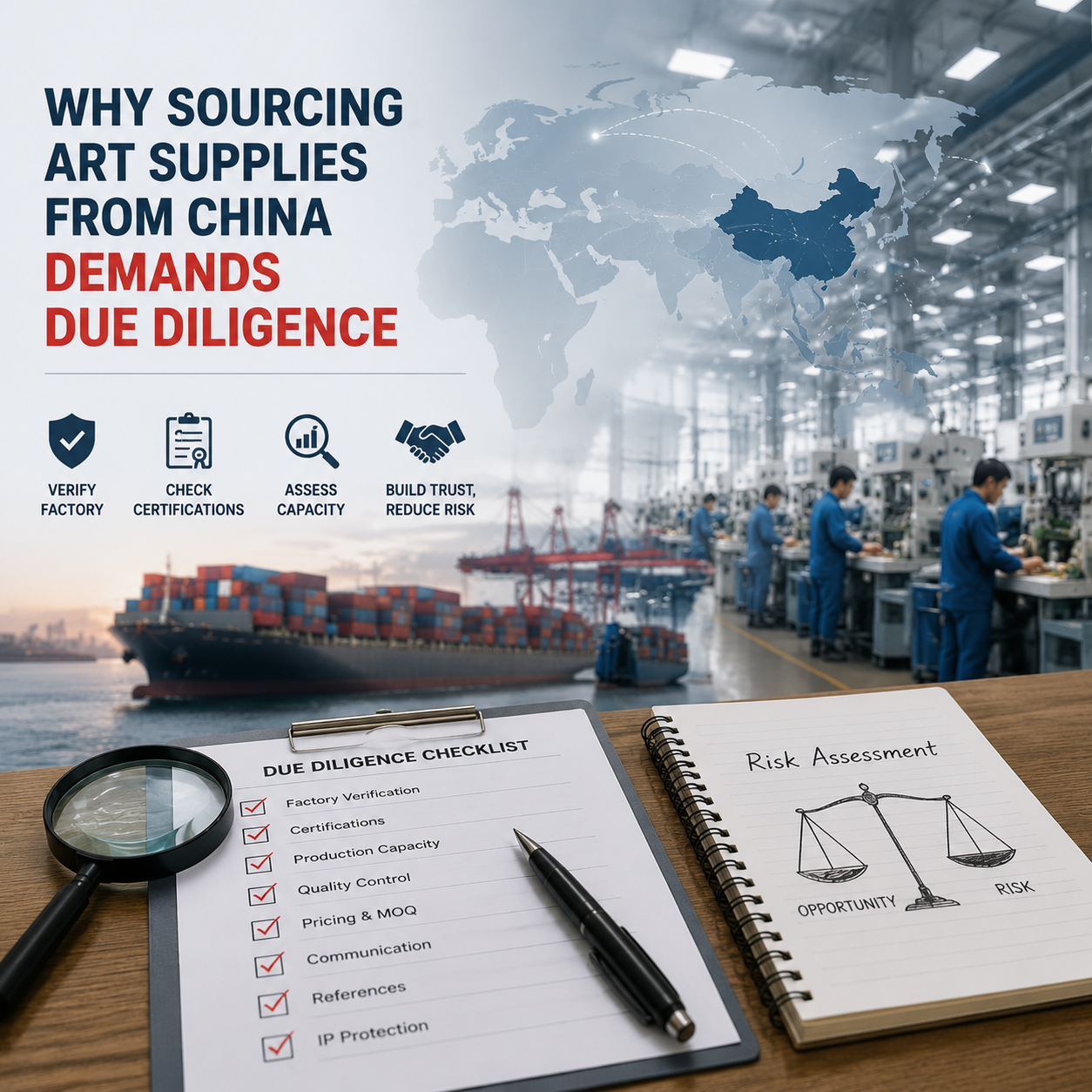
Why Sourcing Art Supplies from China Demands Due Diligence
China produces over 60% of the world's art supplies by volume — colored pencils, acrylic paints, markers, pastels, and sketch kits. For importers, Amazon sellers, and private label brands, Chinese OEM manufacturers offer unmatched pricing and production flexibility. But that opportunity comes with risk. For every reliable factory with 15 years of export experience and international certifications, there are trading companies posing as manufacturers, factories cutting corners on safety compliance, and suppliers who vanish after a single order. Knowing how to separate the real from the risky is the single most important skill for any art supply brand sourcing from China.
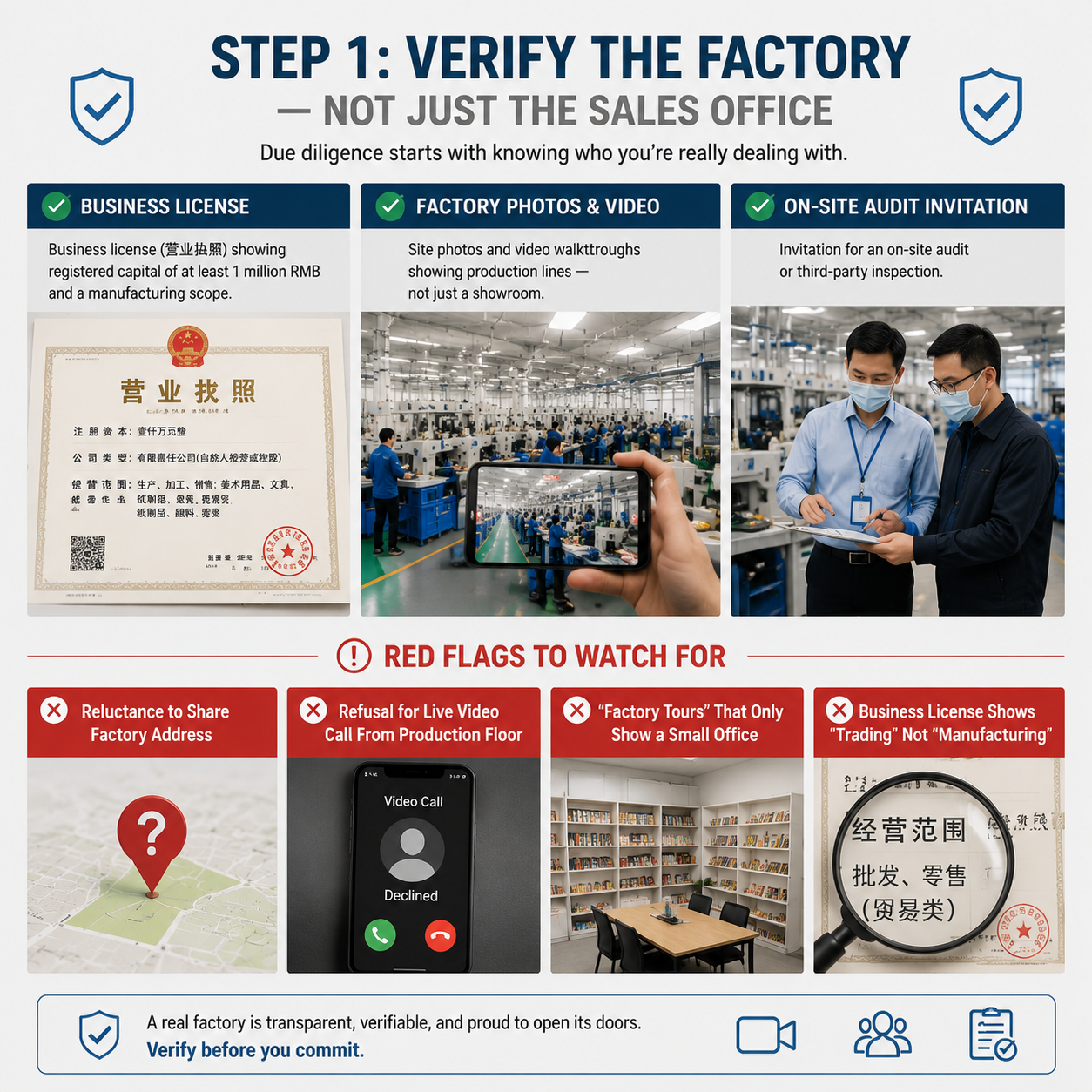
Step 1: Verify the Factory — Not Just the Sales Office
The most common sourcing mistake is dealing with a trading company that presents itself as a manufacturer. A legitimate factory will provide: a business license (营业执照) showing registered capital of at least 1 million RMB and a manufacturing scope, site photos and video walkthroughs showing production lines — not just a showroom, and an invitation for an on-site audit or third-party inspection. Red flags include: reluctance to share the factory address, refusal to do a live video call from the production floor, 'factory tours' that only show a small office with product samples, and business licenses listing 'trading' rather than 'manufacturing' as the business scope. At H&B Art, we welcome client audits — our 5,000m² Shanghai facility has been independently verified by SGS, and we provide live video walkthroughs to clients who cannot visit in person.
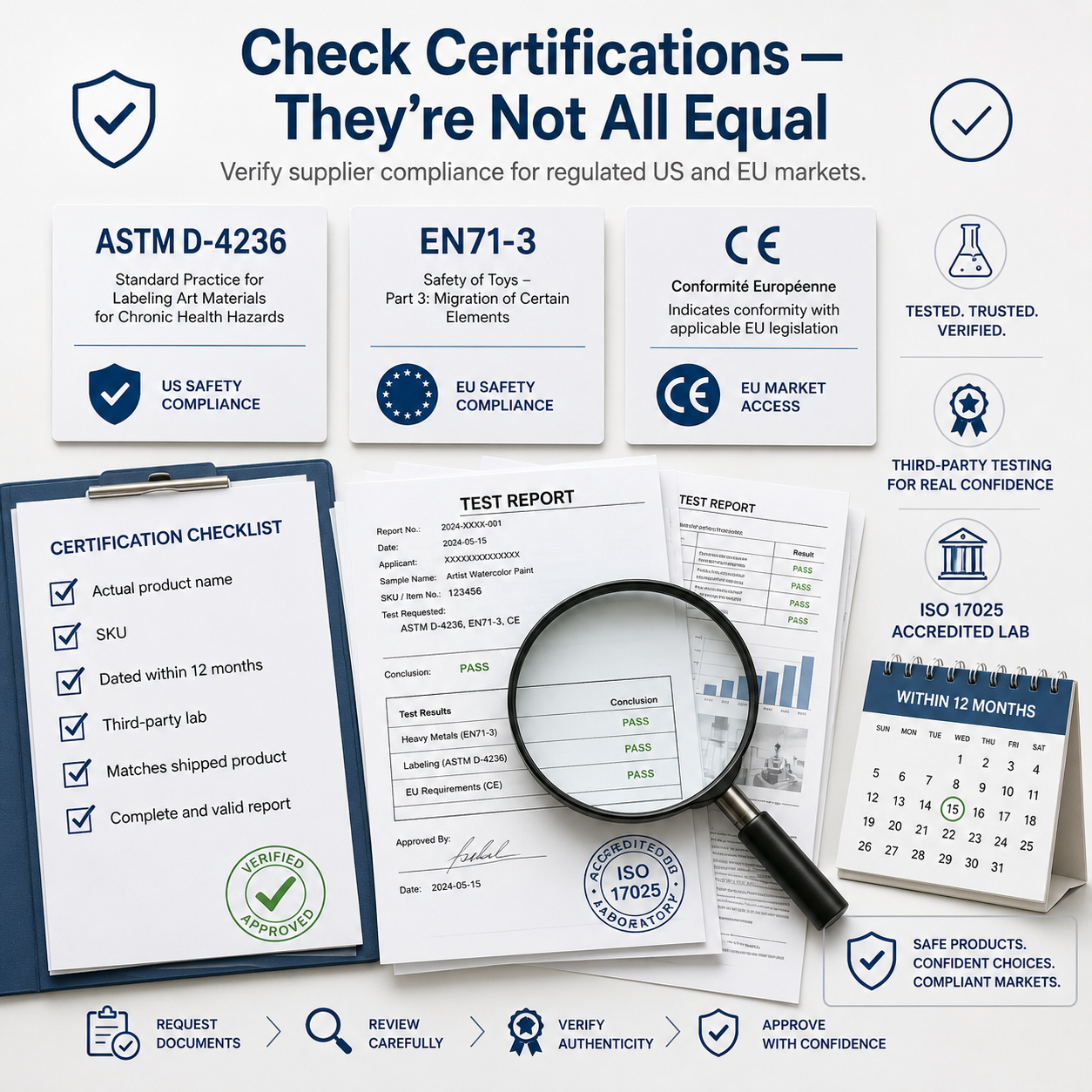
Step 2: Check Certifications — They're Not All Equal
Art supplies sold in regulated markets require specific safety certifications. The three essential certifications for US and EU markets are: ASTM D-4236 — mandatory for all art materials sold in the United States, requiring toxicological evaluation by a board-certified toxicologist; EN71-3 — the European standard for heavy metals migration, essential for products targeting children under 14; and CE marking — the manufacturer's declaration of conformity with EU health and safety requirements. Always ask for third-party test reports from ISO 17025-accredited laboratories — not in-house testing. Verify that test reports show the actual product name and SKU, are dated within the last 12 months, and come from recognized labs such as SGS, TÜV Rheinland, Intertek, or Bureau Veritas. A manufacturer that hesitates to share test reports or provides expired documentation should be eliminated from consideration immediately.
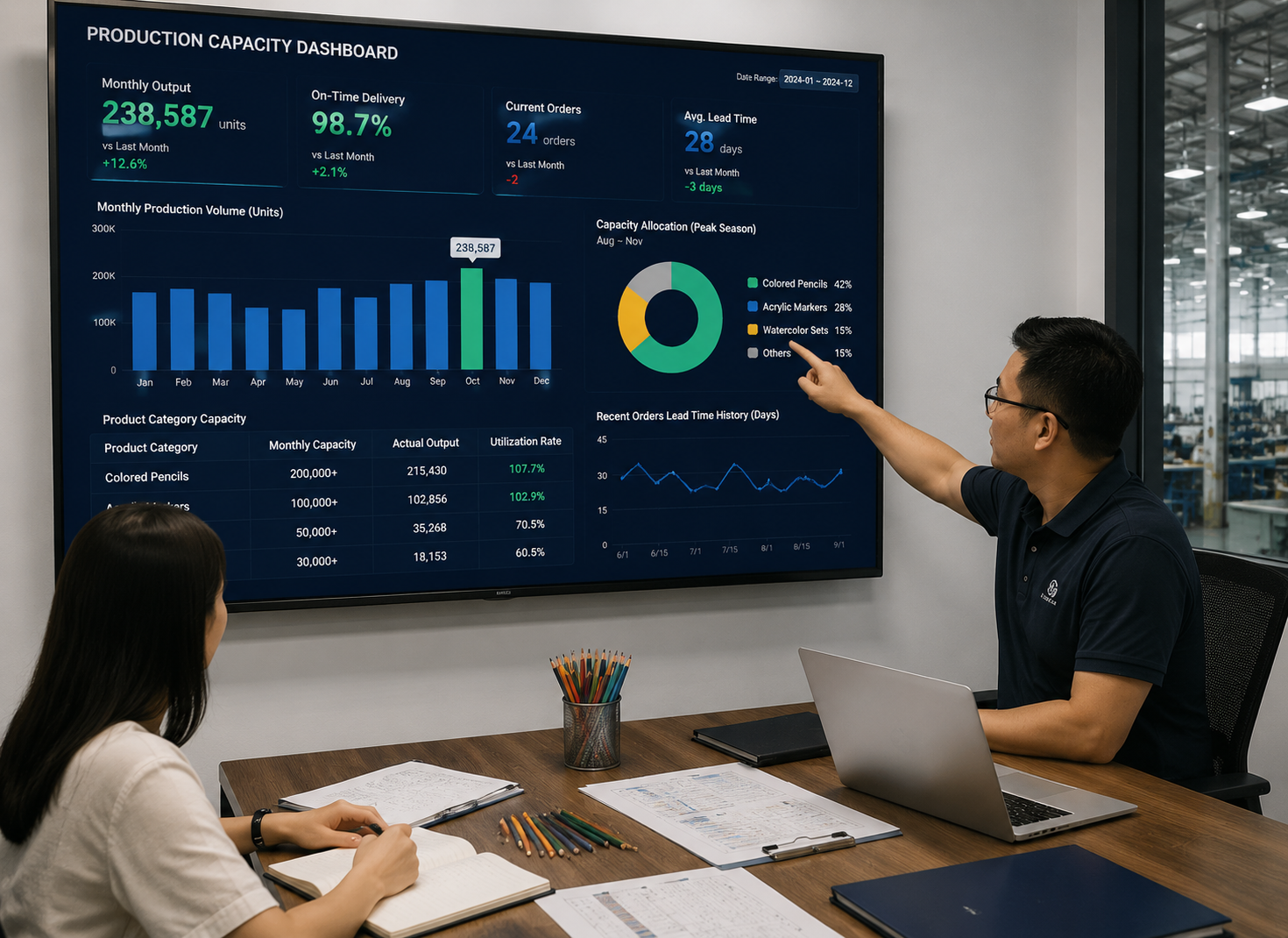
Step 3: Assess Production Capacity and Consistency
A manufacturer's claimed capacity means nothing without evidence. Request: monthly production volume data for your specific product category, lead time history for recent orders of similar scale, minimum order quantity (MOQ) flexibility for first orders versus repeat orders, and capacity allocation during peak seasons (August-November for holiday inventory). Professional factories like H&B maintain a production schedule dashboard and can commit to firm delivery dates rather than vague ranges. For colored pencils, a reliable manufacturer should produce 200,000+ units per month; for acrylic markers, 100,000+ units. Anything less suggests a small operation that may struggle with scalability when your brand grows.
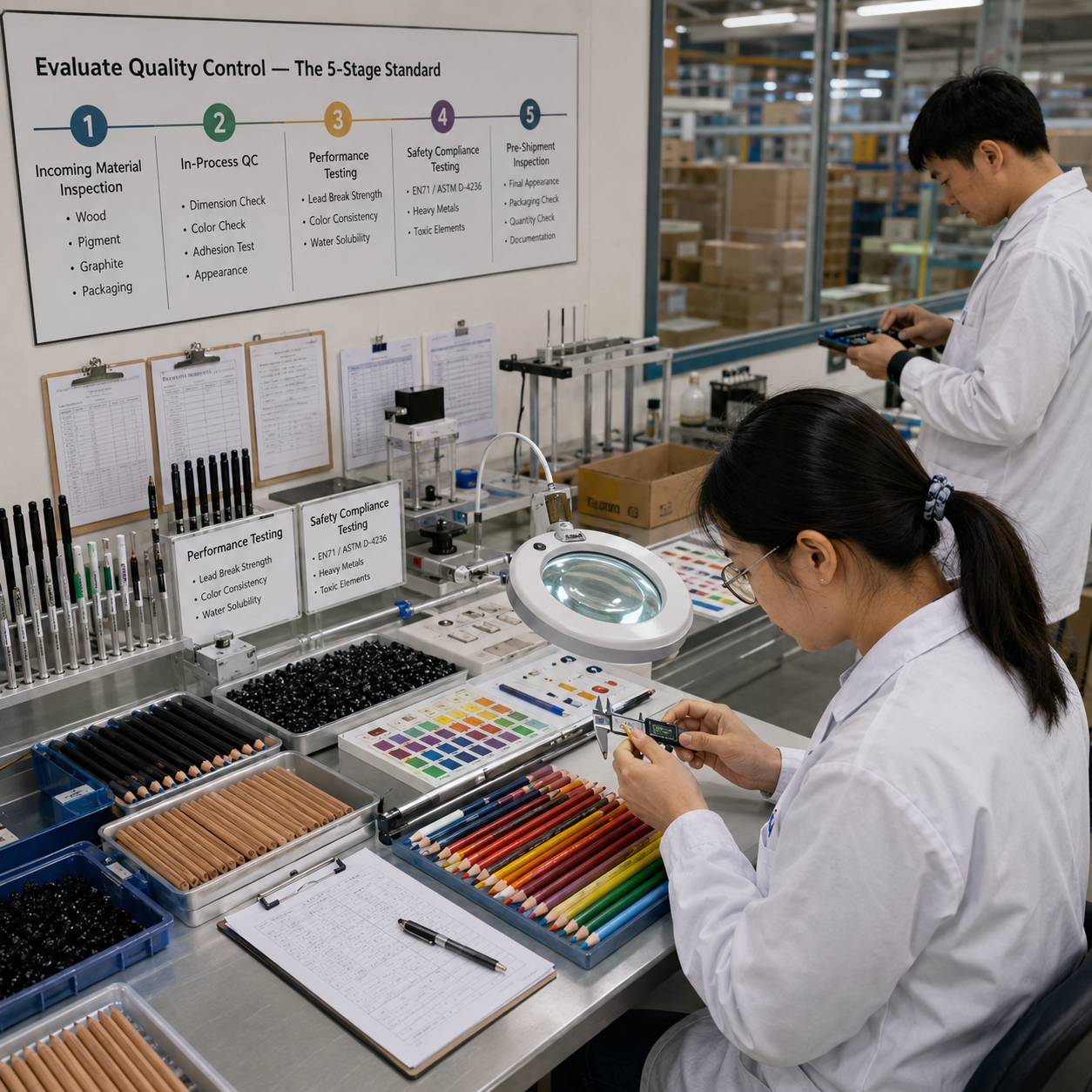
Step 4: Evaluate Quality Control — The 5-Stage Standard
World-class art supply manufacturers operate a multi-stage quality control system, not just a final inspection. The gold standard is: Stage 1 — Incoming Material Inspection: every batch of pigment, binder, wood casing, and packaging is tested before entering production; Stage 2 — In-Process QC: random sampling during production to catch formulation drift or assembly defects; Stage 3 — Performance Testing: finished products tested for color consistency, break resistance, lightfastness, and surface compatibility; Stage 4 — Safety Compliance Testing: third-party lab verification of ASTM D-4236 and EN71-3 compliance; Stage 5 — Pre-Shipment Inspection: AQL sampling (typically Level II, 2.5) before every shipment. Ask the manufacturer to walk you through their QC process. A factory that cannot articulate each stage in detail is likely operating on hope rather than process.
Step 5: Understand MOQ and Pricing Structure
MOQ is not just a number — it reveals the manufacturer's business model. 500-1,000 units MOQ typically indicates a flexible factory willing to work with growing brands. 3,000-5,000 units MOQ suggests a production line optimized for large, established buyers. No MOQ or extremely low MOQ (under 100 units) is a red flag — it usually means the supplier is a trading company drop-shipping from multiple factories with no quality control over individual batches. Beyond MOQ, ask about: tiered pricing based on order volume, mold and setup fees for custom packaging, sample costs and whether they are refundable against bulk orders, payment terms (30% deposit, 70% before shipment is standard; 100% upfront is a risk), and INCOTERMS (FOB Shanghai is typical for Chinese manufacturers). Transparent pricing with no hidden fees is a strong signal of a trustworthy supplier.
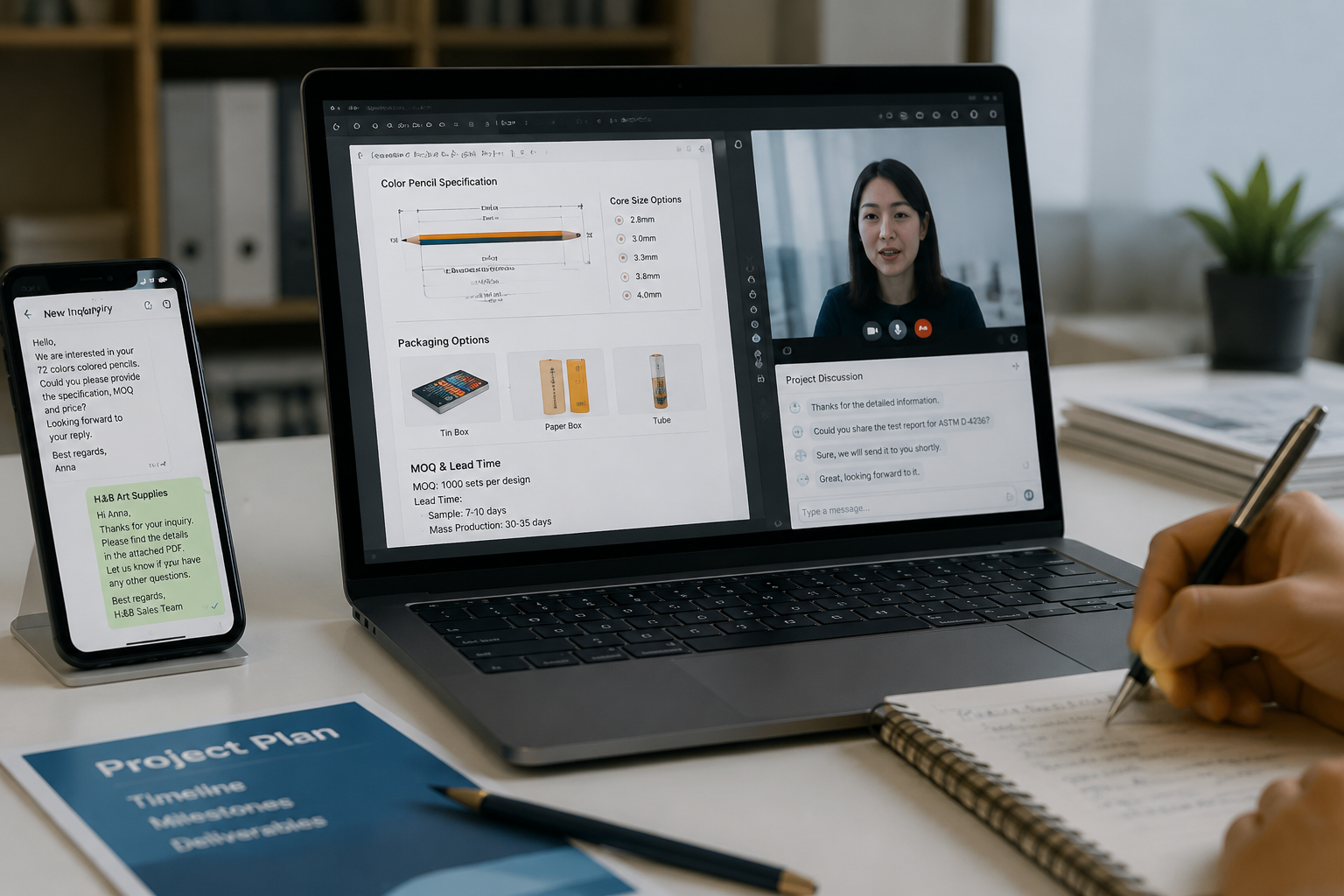
Step 6: Evaluate Communication and Responsiveness
Poor communication during the sales process predicts poor communication during production. Assess: response time to initial inquiries (under 24 hours is professional), quality of English communication (clear technical English indicates export experience), willingness to answer detailed technical questions, and use of professional tools such as email (not just WeChat), video conferencing, and shared project tracking. A manufacturer that dodges specific questions about pigment formulations, core diameters, or packaging materials with generic responses — 'don't worry, we take care of everything' — should be treated with caution. The best manufacturers are proud of their technical capabilities and eager to demonstrate their expertise.
Step 7: Request and Verify References
A reliable manufacturer has nothing to hide. Request: a list of 3-5 reference clients in your target market, permission to contact those references directly, and evidence of long-term partnerships (multi-year contracts, repeat order history). When contacting references, ask: 'Would you order from this manufacturer again?', 'Did the delivered products match the approved samples?', 'Were there any quality issues, and if so, how were they resolved?', and 'Was the manufacturer proactive about communicating delays or problems?' Silence or defensiveness from a manufacturer when asked for references is a disqualifying signal.
Step 8: Protect Your Intellectual Property
For private label brands, IP protection is non-negotiable. Before sharing proprietary packaging designs, mold specifications, or color formulations, ensure: an NNN agreement (Non-Disclosure, Non-Use, Non-Circumvention) is signed — standard NNN templates are enforceable under Chinese law, the manufacturer has a documented policy for separating client IP across different production batches, and your packaging and product designs are registered in your home market before production begins. Established manufacturers like H&B Art maintain strict IP separation protocols — every OEM client's formulations, molds, and packaging files are stored in isolated digital and physical systems accessible only to authorized personnel.
H&B Art: A Benchmark for Reliable OEM Manufacturing
At H&B Art, we have spent 16 years building exactly the kind of manufacturing operation that this guide describes. Our credentials: SGS factory-audited with a 5,000m² Shanghai production facility, ASTM D-4236 and EN71-3 certified across all 300+ SKUs with annual third-party re-certification, 5-stage QC system with documented AQL sampling for every shipment, MOQ starting at 500 units with flexible scaling for proven partners, 50+ country export experience with full compliance documentation for customs clearance, and dedicated OEM account managers who provide weekly production updates, pre-shipment photos, and real-time communication throughout the order lifecycle. When you apply the criteria in this guide to H&B Art, we invite you to hold us to every single standard — because we already meet them all.
Conclusion: Trust Is Earned, Not Claimed
Finding a reliable art supplies OEM manufacturer in China is not about luck — it is about process. The eight-step framework in this guide — factory verification, certification audit, capacity assessment, QC evaluation, pricing transparency, communication quality, reference checking, and IP protection — will filter out 90% of unsuitable suppliers before you place a single order. For the manufacturers who pass every step, like H&B Art, the result is a partnership built on transparency, consistency, and mutual growth. Your brand deserves nothing less.