How to Evaluate an Art Supplies OEM Factory in China: A 10-Point Due Diligence Checklist
- Share
- publisher
- H&B Art Supplies
- Issue Time
- Aug 9,2026
Summary
A practical 10-point checklist for B2B buyers evaluating art supplies OEM factories in China. Covers certifications, audits, MOQ, and red flags to avoid.
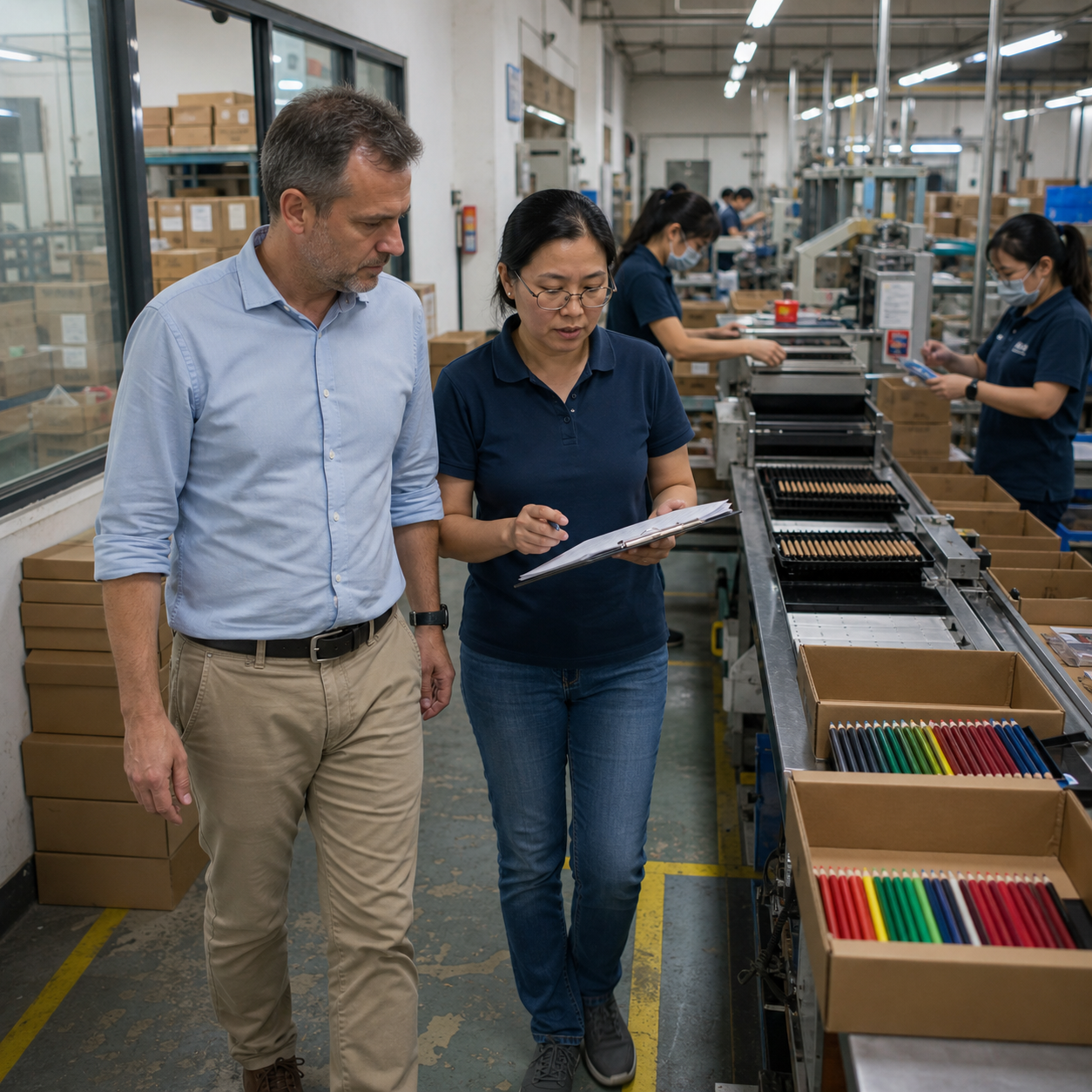
Placing a first OEM order with a Chinese art supplies factory usually means committing US$10,000 or more to inventory, samples, and months of coordination. Yet a surprising number of brands make that commitment after little more than a few email exchanges and a video call. The consequences of skipping due diligence show up later and cost far more than the savings: off-center pencil cores that break during sharpening, pigments that fade after a year on a shelf, packaging that arrives crushed, or compliance certificates that turn out to be copies of another company's documents. Due diligence is not about distrust. It is about confirming that the factory you are evaluating can actually produce what it promises, at the quality your market expects, and will still be around to support you after your first container leaves the port. This 10-point checklist covers everything to verify before you sign an OEM contract — whether you are sourcing colored pencils, acrylic paints, brushes, or soft pastels. Start with legal identity. Request the factory's business license (营业执照) and verify that its registered scope of business actually covers manufacturing the products you are buying — many trading companies hold licenses that only cover domestic trade. Then confirm the export credentials: the export license (进出口权), the customs registration number, and the exact company name that will appear on your contract, invoices, and bank account. Cross-check the name against third-party company records. If the seller's name does not match the license holder, that is a deal-breaker, not a detail. Certifications determine which markets you can legally sell into, so know what each one means before you ask for it: Ask for current, dated certificates issued in the factory's own name. An expired certificate, a photocopy, or a report issued to a different company is a red flag — not a technicality. A video tour of the production floor is non-negotiable. Ask to see the full flow: pencil core extrusion, wood slat routing, painting, assembly, sharpening, and the packing line. Then look at the details: dust extraction over the woodworking stations (cedar and poplar sawdust is a fire and respiratory hazard), ventilation in the paint shop, labeled material storage, batch tracking on cartons, and written QC records. A factory that hesitates to show you its floor is usually hiding something that is on it. Never commit without samples. Test for the three failure modes that matter most in art supplies: A competent OEM factory ships samples within 7–14 days and is happy to discuss test methodology and results in detail. For colored pencils and art sets, MOQs typically run 300–2,000 sets for standard, stock lines. Custom colors, private label branding, or custom packaging usually push the MOQ to 3,000+ sets. Ask how the MOQ splits across SKUs: a "1,000-set MOQ" that must all be one color is very different from one that allows a 48-color assortment. Get the MOQ structure in writing — per SKU and per color — so there are no surprises at quotation time. Realistic production lead times for art supplies OEM run 15–45 days for standard products, scaling with volume and degree of customization. Beyond the headline lead time, ask about current capacity (sets per month), how many orders are already in the pipeline, and the factory's historical on-time shipment rate. A factory quoting 15 days while running at 120% capacity is quoting fiction. Communication quality is a leading indicator of order execution quality. A reliable factory responds to inquiries within 24 business hours and can discuss technical details — materials, QC procedures, packaging specifications — in clear English. Test this before you order: ask a few technical questions about pigment load or sharpening quality and see whether the answers come from a script or from someone who understands production. Standard terms for first orders are T/T with 30% deposit and 70% balance against the copy of the bill of lading (sometimes split 30/50/20). Larger orders may run under a letter of credit at sight. For first-time relationships, platform trade assurance (escrow) adds a useful layer of protection. Treat any request for 100% payment upfront as a serious warning sign, regardless of how good the samples looked. Packaging is where brands differentiate — and where costs quietly accumulate. Confirm the factory can handle standard printed paper boxes and polybags, custom tin boxes, wooden boxes, blister packs, window boxes, shrink wrap, UPC stickers, and printed inserts. Ask about the artwork proofing process, one-time mold costs for custom tins, and the factory's defect policy on packaging. Private label printing typically adds $0.10–$0.50 per unit, so scope it into your budget early. Ask for the factory's defect policy in writing: what defect rate is acceptable (AQL 2.5 is the industry norm), how many defective units will be replaced, and on what terms. Confirm that the factory accepts third-party pre-shipment inspection (SGS, Intertek) at the buyer's cost. The best factories treat post-shipment support as the beginning of the next order, not the end of the current one — and their pricing reflects that they expect a long relationship. Some signals are decisive. Walk away if a factory: To see the checklist in practice, consider H&B Art Supplies (Shanghai Haobin Stationery & Art Material Co., Ltd., hb-art.com), a Chinese manufacturer of colored pencils, acrylic paints, brushes, and soft pastels. H&B operates its own production lines and provides its factory profile and business registration documents on request. Its product lines carry EN71, ASTM D-4236, and CE compliance documentation, the team offers video factory tours, and samples ship within two weeks. MOQs run from 300 to 2,000 sets for standard lines, production lead times are quoted at 15–45 days, and the export staff communicate in English. Orders run under T/T or trade assurance terms, private label packaging including custom tins is part of the standard offering, and third-party pre-shipment inspection is welcomed. None of this makes H&B unique — which is exactly the point. Any factory you evaluate should be able to answer the same ten questions, with documents and samples to back them up. Use the checklist on every supplier, including us. Request a factory profile, sample kit, and compliance certificates — no commitment required.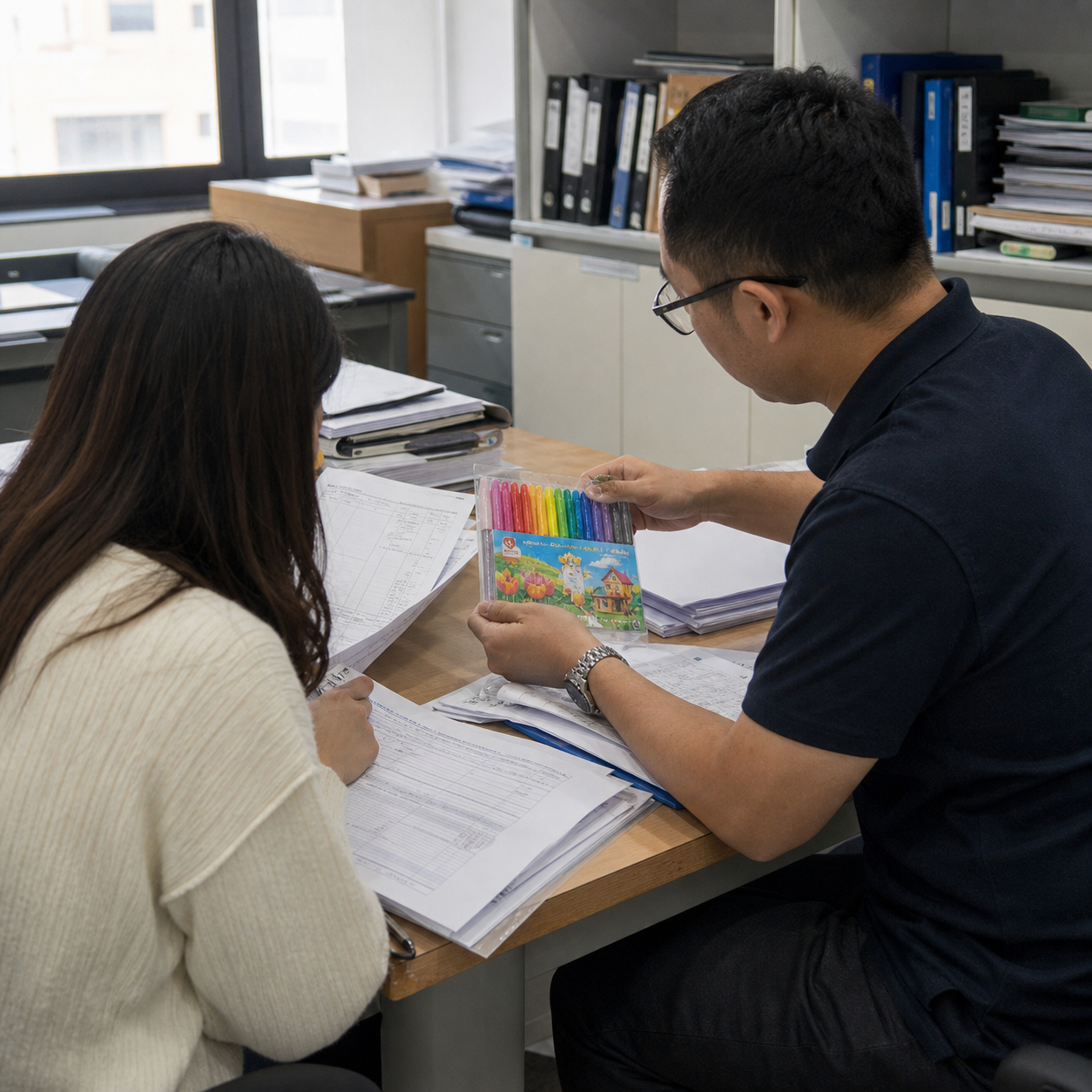 whether you are sourcing colored pencils, acrylic paints, brushes, or soft pastels.
The 10-Point Due Diligence Checklist
1. Business License & Export Credentials Verification
2. Product Certifications: EN71-3, ASTM D-4236, CE, BSCI
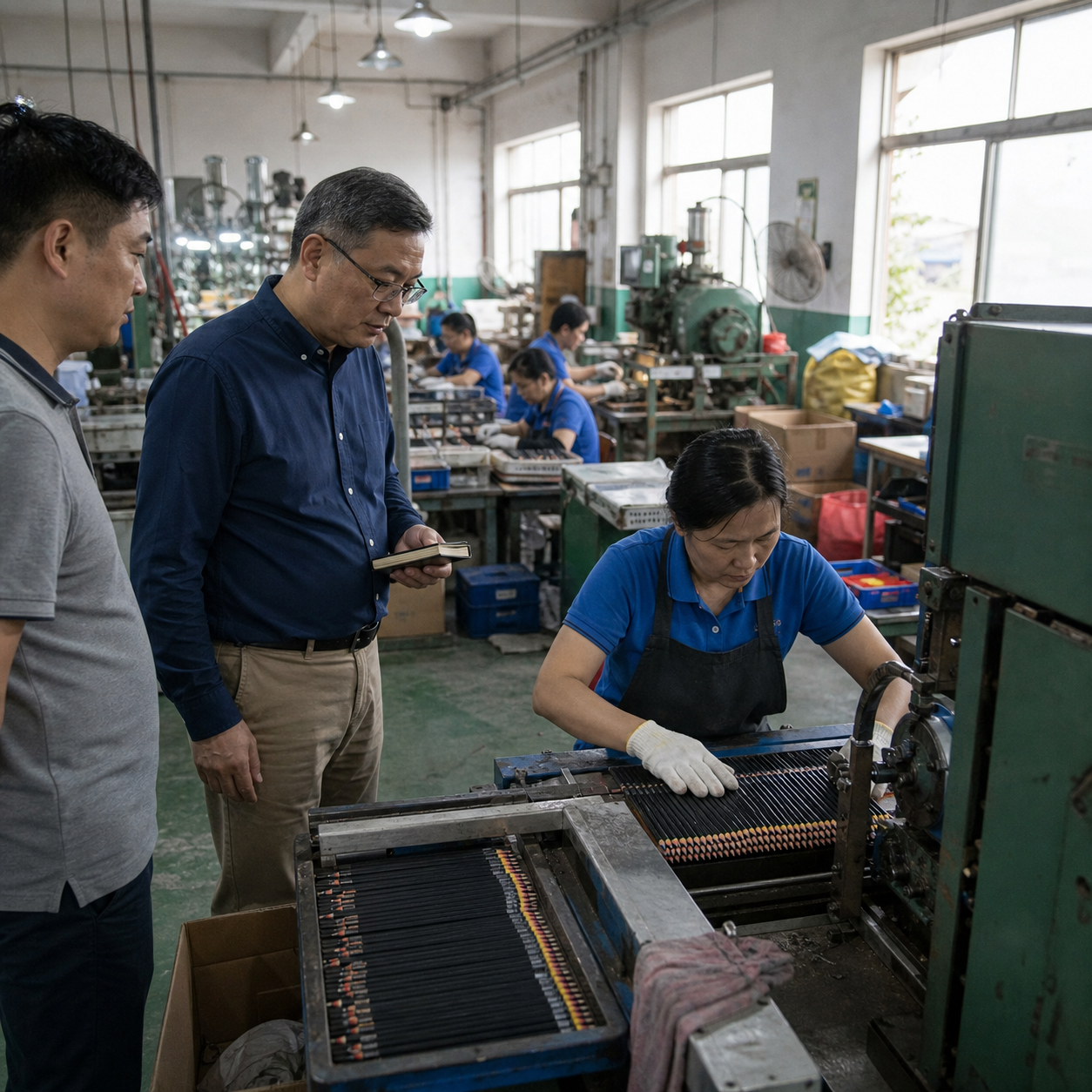
3. Factory Audit: What to Look For On-Site or Via Video Call
4. Sample Quality Testing: Colorfastness, Breakage Rate, Toxicity
5. Minimum Order Quantity (MOQ): Typical Ranges
6. Production Capacity & Lead Time: Realistic Timelines
7. Communication Quality: English Proficiency & Response Speed
8. Payment Terms: T/T, L/C, Trade Assurance
9. Packaging & Private Label Capabilities
10. Post-Shipment Support & Complaint Resolution
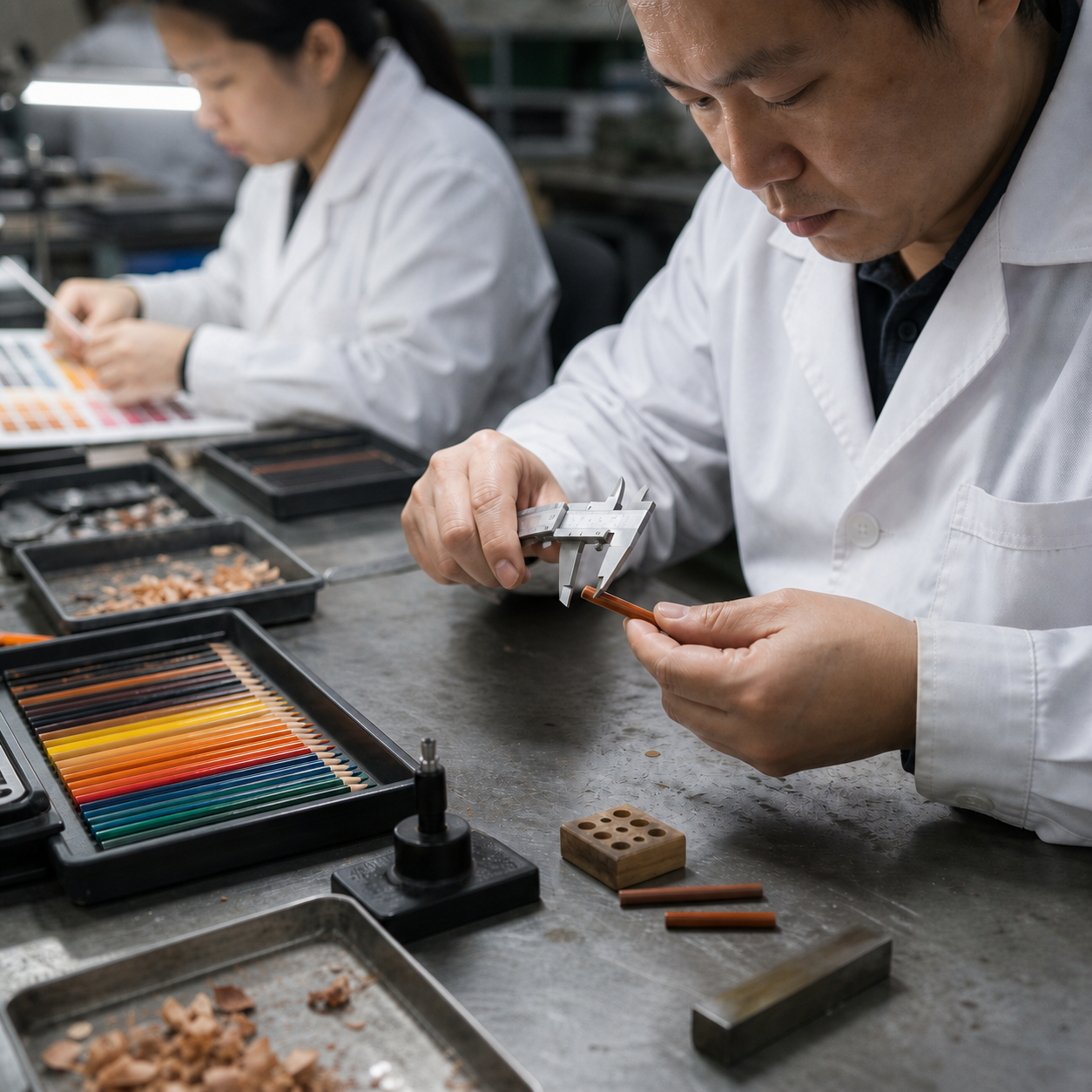
5 Red Flags to Walk Away From
How H&B Passes All 10 Checks
💼 Ready to Evaluate H&B?